
Monday, July 23, 2012
Update on my family...
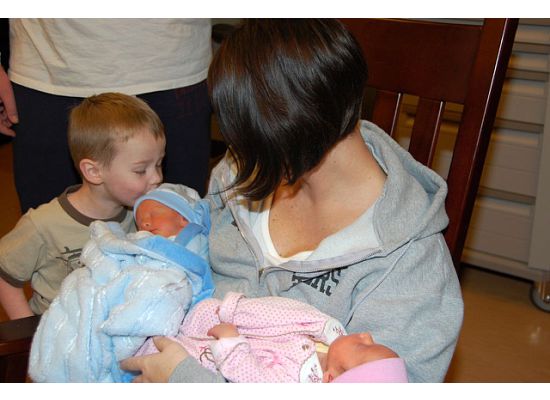
We are home from the hospital and Owen is doing "okay". He has chemical meningitis, which is a complicatin from surgery. He is taking massive steroids and they increased his pain medications. He is feeling pretty rotten, but did mention his catch phrase "this is the best day ever" today! That was wonderful to hear. We return to the hospital in the morning for more labs and a CT scan. Praying for normal test results for the genetic test for MLC-1 and all other labs. Love my kids so very much.


Sunday, July 15, 2012

Monday, July 9, 2012
Week 3 EDUC 6357
QUESTION #1
How you would respond to a parent/family member who informed you they did not want anyone who is perceived (or self-reported) homosexual or transgender to be caring for, educating, and/or interacting with their child.
I actually had this happen. My husband has a very large Catholic family. Some of his aunts and uncles are very strict in their religious beliefs and frown upon homosexuality. I am also Catholic, but am very liberal in my views. At one Christmas gathering, one of his uncles was talking to several of his siblings and their spouses. Several of Brian's aunts and uncles are in the education field. His uncle knew that I was a teacher and simply stated that he did not want "gays teaching his only child". I simply asked him why he felt that way. He stated that he did not think sexual thoughts should go into a school setting. I told him that just because someone is homosexual it does not mean that they think about sex all the time. I asked him if he would rather have a caring, creative homosexual teacher or a rude, careless heterosexual teacher for his child. He responded that he guesses that he would want the caring one. I know that I did not change his overall views, but maybe he opened his mind for a bit.
QUESTION #2
If you have ever used or heard homophobic terms such as "fag," "gay," "homo," "sissy," "tom boy," or "lesbo" as an insult by a child toward another child? Or, by an adult toward a child? Describe what occurred. How might these types of comments influence all children?
I taught 5th-8th grade students. When I taught in the junior high school setting, I had all boys in my classroom. I taught in a self-contained Emotional Disabilities classroom. Calling each other "gay" was something that I heard a lot. One day, one of my students, Damien, came to school after a long break. He was in 8th grade and many of the other boys looked up to him. Damien often remarked that the other boys were acting "gay" or an assignment was "gay". The remarks always had a negative connotation and were meant as an insult. Can you imagine if your lifestyle was to root of insults? That would make one become so ashamed of who you are. Damien and I had a good rapport and he trusted me. One day it was his turn to eat lunch in my classroom with my male assistant and myself. Damien told me that his older brother had told him over the weekend that he was homosexual. Damien was having a very hard time with this. He told me that he loved his brother, but thought it was so gross. He did not want the other boys to find out. Later that afternoon, he got into a fight defending another boy (on the bus) that the other students had called "gay". Although I do not condone fighting, I thought it was a good step for Damien in accepting his brother.
Friday, June 22, 2012
Reflection Week 8
This course has provided me with a plethora of new ideas and skills. It was apparent to me this morning when I took my son, Owen, to Riley Children's Hospital. That hospital is filled with families with diverse medical, cultural, educational backgrounds. I sat back and observed families and staff interacting. My son had a MRI again last week and we were referred to a neurosurgeon for brain surgery. Communcation is so important as well as effective collaboration. Skills that I may not have noticed prior to this course. Best wishes to you all and please think of my son over the next few weeks...thanks!
Tuesday, June 5, 2012
Blog Week 6
Adjourning…What makes it
difficult?
I have been a part of many
groups. Last year I participated in a
Christ Renew His Parish group from my church.
After the initial weekend retreat, we met weekly to discuss topics
related to our faith journey. It was a
very valuable experience for me. I
cherished it.
The aspect of the group that
made it hardest to say good-bye was that I enjoyed learning about my faith from
experiences of others. For our group, we
had one assignment. We had to pray and
organize (and put on) a retreat weekend for the next group of women. We learned a lot about each other during this
time. As our closing ritual, we prayed
for our upcoming week. We prayed for the
women in the next group. It helped me
set goals for myself in terms of my faith journey. I would not necessarily say that the group of
12 women was high-performing in terms of a job; however, I hope that we made an
impact on each other and the women that we presented for. One aspect that did annoy me about our
closing time was that it was usually late.
The group could have benefited from a schedule and a person in charge of
keeping the group on track. At the end
of the six month faith journey, we presented our weekend and met many new
women. However, it was quite sad because
we knew that we would no longer see each other every Monday evening. We created a group on Facebook (which we all
had a site) and kept in touch that way.
We also meet every three months for a social gathering at a Tour the
World dinner. For this social dinner, we
pick different restaurants around the city with diverse food (Thai, Japanese,
Mexican, Brazilian, Greek, etc). It is
always a very fun night!
Why is adjourning an essential stage
of teamwork? For some groups, the closeness of the group can make it difficult
to adjourn. However, celebrating our
accomplishments by gathering together can lead us in new paths. For example, I met a lady from my church that
also lost an infant child and has a child with special needs. She cannot drive due to visual impairment, so
she asked me if I could drive her to a monthly meeting for mothers of children with
special needs. This is a friendship that
I deeply cherish. I feel that by meeting
this wonderful lady at one group, we have a bond and now we are close
friends.
I love meeting new people and
communicating with wonderful people!
During my master’s degree program, I have “virtually met” many intelligent
people. I hope that we can continue to
stay in contact through our blogs. This
is a personal type of communication that can inform others about our jobs or
upcoming events. It can also share our
challenges and triumphs.
Adjourning is an important part
of teamwork because it can show that we cared about the group in which we
participated. It can also make us feel
valuable. By adjourning, we can open up
time for other endeavors.

These are my children's "TEAMWORK" shirts...superheros! Gotta love them!
Saturday, June 2, 2012
Week 5 Conflict Resolution
CONFLICT
RESOLUTION:
The
conflict that I chose to look into is that with my youngest son’s new
physician. I understand that Owen’s
medical history is a lot to understand; however, I feel that as a physician it
is initially your job to listen to the medical history. Last week we met with a new specialist for
Owen’s brain issues and abnormalities.
He had the paperwork from Owen’s recent ophthalmology appointment to
check the pressure in his brain and the orthopedic surgeon report. The physician stated that Owen is a “toe
walker” based on the report. However,
Owen was not currently walking on his toes.
He has leg braces that we utilize when needed. However, we do not use them every day to help
him strengthen his muscles. Based on the
paperwork and not looking at Owen, he suggested that we put him in leg braces
all day and increase aquatic therapy. I knew that this was wrong for multiple
reasons. One: I AM HIS MOTHER and I
SPEND ALMOST EVERY SINGLE MINUTE WITH HIM!
I get so annoyed when some of the specialists try to tell me something
that I do not agree with based on a 15 minute appointment. After he stated that I asked him to watch
Owen walk. Owen is a toe-walker when he
is tired; however, he is doing great and was walking steadily without braces
and not on his toes. During this
conflict, I had to realize that I needed to also listen. I needed to let him do his job, ask
questions, and listen to his response as long as my child’s needs are being
appropriately met. I needed to realize
that I was not really annoyed with the physician directly. He was reading a recommendation by another
physician. Sometimes I need to listen
before shutting down my listening skills because I am so annoyed and planning
my response. I NEED TO BE AN EFFECTIVE
LISTENER and this might begin with my initial attitude. If I enter the discussion annoyed then the
climate shifts to defensive or uncertain.
This can impact the success of the conflict resolution.
The
material on the NVC website was very interesting to me. When I read the information on the website, I
thought about how I could apply the information in my own life.
NVC
skills that I would like to learn more about and apply to my own life are:
·
“Differentiating observation from
evaluation, being able to carefully observe what is happening free of
evaluation, and to specify behaviors and conditions that are affecting us;
·
Differentiating feeling from thinking,
being able to identify and express internal feeling states in a way that does
not imply judgment, criticism, or blame/punishment;
·
Connecting with the universal human
needs/values (e.g. sustenance, trust, understanding) in us that are being met
or not met in relation to what is happening and how we are feeling; and,
·
Requesting what we would like in a way that
clearly and specifically states what we do want (rather than what we don’t
want), and that is truly a request and not a demand (i.e. attempting to
motivate, however subtly, out of fear, guilt, shame, obligation, etc. rather
than out of willingness and compassionate giving).” (NVC, n.d.)
I
think that one thing that I would like to try to do is create a supportive
climate. I often get defensive when it
involves my children and their needs. I
want what is best for them. However, I
need to realize that this is not as productive and will most likely not solve
the conflict. I hope to learn to listen,
clarify, and then respond before judging and becoming defensive. By doing this I can help create a supportive
climate in which people work together to meet the needs of my children.
I chose these photos because ALL OF MY CHILDREN HAVE GOT THE TOILET SEAT STUCK ON THEIR HEAD!!!! I wish that they would have listened and observed the first time...but they decided to all get it stuck at seperate times. At least they make cute (and disturbing) photos for me to put on the bathroom wall!


Friday, May 25, 2012
Communication Goals
According to the assessments this week, my husband (Brian), my friend (Paula), and I assessed my communication anxiety levels, verbal aggressiveness, and listening styles.

My communication goals were: to know my audience, choose the appropriate communication channel, and demonstrate receptive body language.
Hopefully by improving these skills, I will become an effective communicator.

(My husband, Brian, and I at a soccer game!)
The area of communication anxiety had diverse answers. My husband grouped me in the low category. He stated that I was confident and comfortable. He also said that I act comfortable in a variety of situations. My friend, Paula, placed me in the mild category. She stated that I appear as though little rattles me, but she knows from conversations that I get annoyed when interacting with some people that say rude comments about people with special needs or make racial comments. I placed myself in the moderate category. This stated that I have situational anxiety. I would say that this assessment was correct. I feel comfortable speaking to others in most situations; however, I feel uptight when discussing hot topics for me (such as special education or racial issues). It annoys me when others make rude comments about people with disabilities or are racist. I often state that I disagree and tell them why. However, I have to make an effort to stay in control and not to stoop to their ignorant level by yelling. My verbal aggressiveness scores were moderate and low. I have to make an effort to remain calm in these situations. My communication goals were: to know my audience, choose the appropriate communication channel, and demonstrate receptive body language.
Hopefully by improving these skills, I will become an effective communicator.
Subscribe to:
Posts (Atom)