My Connections to Play!
"Play energizes us and enlivens us. It eases our burdents. It renews our natural sense of optimism and opens us up to new possibilities." -Stuart Brown
"In play a child always behaves beyond his average age, above his daily behavior. In play it is as though he were a head taller than himself." -Lev Vygotsky
My parents both encouraged play in different ways. My dad encouraged me to build by making drawings and creating them. He is a very literal-type player. My mom encouraged play that involved nature. We lived in the country and I would map maps, go on hikes, build forts, and play adventurer. My sister is 3 years older than me and I idolized her. She did not particullary enjoy being outside. She liked dolls, playing house, and drawing. I loved interacting with others. Growing up, I particullarly enjoyed painting, building, and being outside. I was also a pretty literal player.
Times have changed a bit since I was little. Technology is everywhere. While I think that there can be some educational benefits to electronic games, it can allow the child to not use their entire creative ability or social skills. Families are very busy. Organized sports are starting at a very young age. In some cases, these organized sports have taken the place of playtime.
I hope that young children are encouraged to play and use their imagination. I hope that children are encouraged to play in various ways other then their preferred way. For example, my oldest son, Noah, is a very imaginative player. He loves to create new themes for play and use toys for various other ways other than their purpose. Our little neighbor boy, Ty, is a few months older than Noah. Ty is a very literal player. I think that it is great to watch them interact and push each other to play in various forms.
Photos: (These are examples of things that I enjoyed doing as a child!)
Noah, Owen, and Ella playing outside and enjoying each other!
Noah loves play-doh!
The boys playing with my old Legos.
Ella playing babies.
Owen playing with his blocks and trucks.
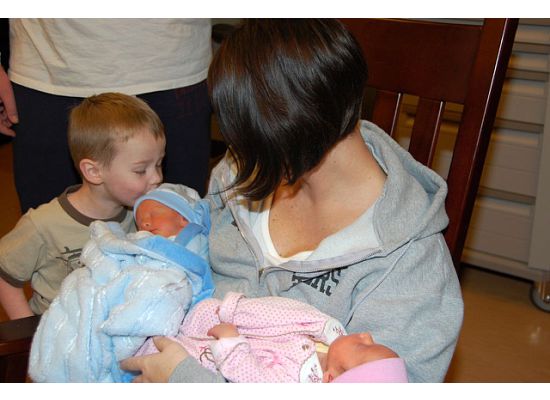
Play has given me adventures that I may never actually experience in my lifetime. It allowed me to learn social skills, build friendships, create new ideas, and become comfortable being by myself. As an adult, I try to encourage my children to play in various ways. Noah is very imaginative. Ella loves to play babies and make-believe. Owen loves order in his play. He loves to line up trucks and stack blocks. All of my kids like to play outside and I enjoy watching them learn!
Tuesday, September 27, 2011
Friday, September 16, 2011
Relationship Reflection
*What do I look for in a friendship? -honesty, straightforward communication, mutual respect, nonjudgemental
*What special characteristics helps them stand out from other relationships? -I think that it is important to have a lot of mutual communication, to not feel that I am the only one trying in the relationship, honesty, not feeling judged, and feeling respected.
*What would my life be without the "influential" relationships? -I love being able to be open and honest. I like having a good time and helping others when needed. I would be lonely without these wonderful relationships.
*What helps maintain these relationships over time? -mutual respect, honesty, open communication
*How can the experiences learned from these relationships impact my work as an effective early childhood professional? -I learn a lot from my loved ones. I have learned to be open and honest. I trust my loved ones and love not being judged.
My parents have taught me a lot about relationships. I have a wonderful relationship with each of my parents. We speak daily. We are honest with each other. They do not judge me and help me in deciding important points in my life. They talk openly with me and are caring. This is type of relationship that I sought after in a mate. I formed a wonderful relationship with my husband, Brian. He is caring, honest, respectful, and nonjudgmental. I hope that this is the type of relationship that I am forming with my own children.
While writing down my "important" factors in a relationship, all of the points were things that this week's information encouraged in between parents and teachers.
*What special characteristics helps them stand out from other relationships? -I think that it is important to have a lot of mutual communication, to not feel that I am the only one trying in the relationship, honesty, not feeling judged, and feeling respected.
*What would my life be without the "influential" relationships? -I love being able to be open and honest. I like having a good time and helping others when needed. I would be lonely without these wonderful relationships.
*What helps maintain these relationships over time? -mutual respect, honesty, open communication
*How can the experiences learned from these relationships impact my work as an effective early childhood professional? -I learn a lot from my loved ones. I have learned to be open and honest. I trust my loved ones and love not being judged.
My parents have taught me a lot about relationships. I have a wonderful relationship with each of my parents. We speak daily. We are honest with each other. They do not judge me and help me in deciding important points in my life. They talk openly with me and are caring. This is type of relationship that I sought after in a mate. I formed a wonderful relationship with my husband, Brian. He is caring, honest, respectful, and nonjudgmental. I hope that this is the type of relationship that I am forming with my own children.
While writing down my "important" factors in a relationship, all of the points were things that this week's information encouraged in between parents and teachers.
Saturday, August 20, 2011
Saturday, August 6, 2011
Whole Child Approach
It is important for educators to align resources to students’ multiple needs and advocate
for a more balanced approach.
"What works best for children? What must we all—educators, families, policymakers, and
community members—do to ensure their success? Answering those questions pushes us to
redefine what a successful learner is and how we measure success. A child who enters school
healthy and feels safe is ready to learn. A student who feels connected to school is more likely
to stay in school. All students who have access to challenging and engaging academic programs
are better prepared for further education, work, and civic life. These components must work
together, not in isolation. That is the goal of whole child education." (Retrieved from: http://www.afterschoolnetwork.org/)United States and Poland
In both countries children are obligated to attend schools up to certain age. In the USA there are public primary schools and secondary schools. If someone wants to attend colleges or universities, he or she has to pay for it. In Poland the government pays for all schools- there are public primary, secondary and high schools, as well as colleges and universities. Of course there are private schools in Poland, but every citizen has an opportunity to educate for free from pre-kindergarten up to the university. This is a wonderful opportunity.
In America there exists an imperative to work harder and harder and to keep on looking for a better paid job. There are many people, who spend up to 18 hours a day at work. They have no time for social or private life. They have fewer friends and pay no attention to their neighbors. In Poland people usually know their neighbors, they also make friends and meet them regularly.
In America there are less unemployed and really poor people. Of course, there are some, but in reality, people, who want to work hard and are quite intelligent have a chance to achieve success. The living conditions in the USA are much better than in Poland. If you get a job in America and you work hard, you can afford a car, nice holidays and you do not have to worry about your future. In Poland the salaries hardly ever let you live on such level and you can never be sure, what your future will be like. Polish people are paid less money for a job, for which the Americans are paid much more. At the same time, the costs of living in Poland and in America are not much different.
http://www.afterschoolnetwork.org/
www.wiki.com/poland
Monday, July 18, 2011
Racism
Unfortunately racism still exists. Growing up we lived in a small, country town. Our school was small and not racially diverse. My parents instilled values that were accepting and open to diversity of many kinds (socioeconomic, religious, racial, and cultural). However, I can distinctly remember my senior year of high school when a new freshman moved to our small school. She was a foster child and her parents were in the process of adopting her. She was also African American. She was the only African American in our school. She was such a sweet girl. She was very shy. The guidance counselor asked me to show her around the school. She had never played organized sports before, but said that she loved volleyball. I encouraged her to try out for the volleyball team. As a senior, I was allowed to practice for an hour before school if I wished. I would pick up Sandy and help her work on some serving. One day in the locker room before school, I noticed that something had been written on her locker. It was a horrible racial slur. I was shocked that someone in our small community could be so ignorant and hateful. Sandy was scared to tell our coaches, but I told her that I would go in with her. She told me that this had happened at her last foster home. She told me that one of her foster brothers was racist and would torture her daily. It was so sad. I found out who had written the words on Sandy’s locker and notified the coaches. My teammate was suspended for a game. Her parents were livid about the punishment, not upset with their daughter’s ignorance. This was shocking to me. Sandy seemed to enjoy the rest of the year and I believe our friendship helped shield her from some of the stupidity of others. Unfortunately, the remaining years of high school for her were troublesome. Each year, she had to endure at least one incidence of hate mostly while playing other teams in sports. I wish that all parents were as wonderful as my own and would teach love and acceptance of others.
In the US, racism is a talked about issue. Since the horrific terrorist attacks on the United States on September 11, 2001, Security concerns have understandably increased, but so too has racial profiling and discrimination. I was in college in 2001 and I noticed several instances when signs for different clubs were defaced with a racial slur.
Different countries have cultural and racial differences. While visiting Egypt, my parents were told by their guide not to discuss American issues, not to divulge that they were Americans, and not to speak loudly in public. During their visit, several Americans were raided and killed. Very scary.
Unfortunately, racial issues still exist. I worry about my niece and nephews (who are bi-racial) and hope that they never have to endure any problems. I pray that people view people for their actions and not superficial reasons. It is important for parents to teach their children understanding and acceptance.
In the US, racism is a talked about issue. Since the horrific terrorist attacks on the United States on September 11, 2001, Security concerns have understandably increased, but so too has racial profiling and discrimination. I was in college in 2001 and I noticed several instances when signs for different clubs were defaced with a racial slur.
Different countries have cultural and racial differences. While visiting Egypt, my parents were told by their guide not to discuss American issues, not to divulge that they were Americans, and not to speak loudly in public. During their visit, several Americans were raided and killed. Very scary.
Unfortunately, racial issues still exist. I worry about my niece and nephews (who are bi-racial) and hope that they never have to endure any problems. I pray that people view people for their actions and not superficial reasons. It is important for parents to teach their children understanding and acceptance.
References: http://www.globalissues.org/article/165/racism
Wednesday, July 6, 2011
Breastfeeding
This week I chose to look more closely at the practice of breastfeeding. This topic is very personal to each expectant mother. In some countries there is a pressure to breastfeed, while in others it is very rare to breastfeed.
Breastfeeding provides many benefits to the mother and baby. These benefits include: bonding, cost savings, healthy benefits, and reduction of many illnesses for the mother and child.
The cells, hormones, and antibodies in breast milk protect babies from illness. Breastfeeding may reduce the babies risk of:
Necrotizing entercolitis (a disease that affects the gastrointestinal tract in preterm infants)
Lower Respiratory infections
Asthma
Type 1 and Type 2 Diabetes
Obesity
Childhood Leukemia
Lower risk of SIDS
Lower risk of water contamination
Since I have Type 1 Diabetes, I chose to breastfeed my children. Since they are at higher risk of having diabetes because of me, I wanted to try to reduce this risk in any way possible. I nursed Noah for 11 months while teaching full-time. I only quit when he became too nosy. I also nursed Owen and Ella. They were both preterm and were born during RSV season. I wanted to provide them with as many antibodies as possible to help reduce infections. I nursed Ella until she was 10.5 months and became a biter. I nursed Owen until he was 16 months old. He would probably still nurse if I let him. He loved it! Since Owen has many health issues, I believe that this provided him with the best start possible. Please visit his Caringbridge site at www.caringbridge.org/visit/owenred to see his page. Prayers are welcomed and appreciated. :)
Breastfeeding around the world is different.
In Africa, many women breastfeed. It is open to the public eye and they use a feed on-demand style with the baby.
In the United Kingdom, many women go back to work quickly. It is not practiced in public.
In Ireland, very few women breastfeed. It is not encouraged or talked about openly.
In France, about 50% of mothers breastfeed. Many mothers are working moms and nursing is done in private.
Resources:
www.womenshealth.gov/breastfeeding
http://www.breastfeed.com/nursing-mothers-life/nursing-facts
Breastfeeding provides many benefits to the mother and baby. These benefits include: bonding, cost savings, healthy benefits, and reduction of many illnesses for the mother and child.
The cells, hormones, and antibodies in breast milk protect babies from illness. Breastfeeding may reduce the babies risk of:
Necrotizing entercolitis (a disease that affects the gastrointestinal tract in preterm infants)
Lower Respiratory infections
Asthma
Type 1 and Type 2 Diabetes
Obesity
Childhood Leukemia
Lower risk of SIDS
Lower risk of water contamination
Since I have Type 1 Diabetes, I chose to breastfeed my children. Since they are at higher risk of having diabetes because of me, I wanted to try to reduce this risk in any way possible. I nursed Noah for 11 months while teaching full-time. I only quit when he became too nosy. I also nursed Owen and Ella. They were both preterm and were born during RSV season. I wanted to provide them with as many antibodies as possible to help reduce infections. I nursed Ella until she was 10.5 months and became a biter. I nursed Owen until he was 16 months old. He would probably still nurse if I let him. He loved it! Since Owen has many health issues, I believe that this provided him with the best start possible. Please visit his Caringbridge site at www.caringbridge.org/visit/owenred to see his page. Prayers are welcomed and appreciated. :)
Breastfeeding around the world is different.
In Africa, many women breastfeed. It is open to the public eye and they use a feed on-demand style with the baby.
In the United Kingdom, many women go back to work quickly. It is not practiced in public.
In Ireland, very few women breastfeed. It is not encouraged or talked about openly.
In France, about 50% of mothers breastfeed. Many mothers are working moms and nursing is done in private.
Resources:
www.womenshealth.gov/breastfeeding
http://www.breastfeed.com/nursing-mothers-life/nursing-facts
Friday, July 1, 2011
Birthing Experience
My last pregnancy was very complicated. I was pregnant with triplets and lost one baby at 20 weeks gestation. I was placed on modified activity at 12 weeks. Bedrest came at 20 weeks and hospitalized bedrest for the last 6 1/2 weeks of my pregnancy. I was on a combination of medications to try to stop the contractions and buy the babies time in utero. Very early in the morning on the day that I turned 36 weeks, the contractions became increasingly more intense and it was evident that the babies would be born that day. Because I had to deliver our baby that had passed away, I had to have a c-section. I remember being wheeled back to the OR and being a nervous wreck. I had previously had a c-section with our oldest son, Noah due to him being transverse breech. Once in the OR, I noticed that it was packed full of people. There was a team of people for me, a team of four people each for Owen and Ella, and a representative from the morgue. It was very emotional for my husband and I.
I chose this example because I know that none of my babies would be here if I had not been watched so closely. There were severe complications that required immediate action. I am grateful that we have 3 beautiful children here on earth. I do not think that if this had been my first birth experience that I would have tried to have more children. I am very thankful for modern medicine and the expertice of the medical staff.
Netherlands-
In Netherlands, most women do not see an obstetrician. They see a midwife. Doctors only intervene in high-risk cases. More than half of Dutch women deliver at home. It is required that all women pick up all the medical supplies needed for a home delivery. If you wish to have a hospital birth, the midwife determines when you should arrive. Very few women get an epidural. Most anesthesiologists only work from 9am to 5pm. Many women go home the day of delivery with a home nurse provided and paid for by benefits. The home nurse not only helps with the baby, but cleans, cooks, and instructs on parenting skills.
My pregnancy was high-risk, so I would have been seen by an obstetrician and would have delivered at the hospital. Owen and Ella stayed for a week in the NICU, so I would have had to go home without them. I gained the insight that many deliveries are without complications. I am thankful that many babies are born without complications.
I chose this example because I know that none of my babies would be here if I had not been watched so closely. There were severe complications that required immediate action. I am grateful that we have 3 beautiful children here on earth. I do not think that if this had been my first birth experience that I would have tried to have more children. I am very thankful for modern medicine and the expertice of the medical staff.
Netherlands-
In Netherlands, most women do not see an obstetrician. They see a midwife. Doctors only intervene in high-risk cases. More than half of Dutch women deliver at home. It is required that all women pick up all the medical supplies needed for a home delivery. If you wish to have a hospital birth, the midwife determines when you should arrive. Very few women get an epidural. Most anesthesiologists only work from 9am to 5pm. Many women go home the day of delivery with a home nurse provided and paid for by benefits. The home nurse not only helps with the baby, but cleans, cooks, and instructs on parenting skills.
My pregnancy was high-risk, so I would have been seen by an obstetrician and would have delivered at the hospital. Owen and Ella stayed for a week in the NICU, so I would have had to go home without them. I gained the insight that many deliveries are without complications. I am thankful that many babies are born without complications.
Subscribe to:
Comments (Atom)